Production Lines
Machines and controls under a fan curb stay dry, and the line keeps running instead of stopping for tarps.

Warehouse and plant roofs around the Scottsdale Airpark carry exhaust fans, process vents, and heavy rooftop units. We repair the curbs and flashings that leak around them.
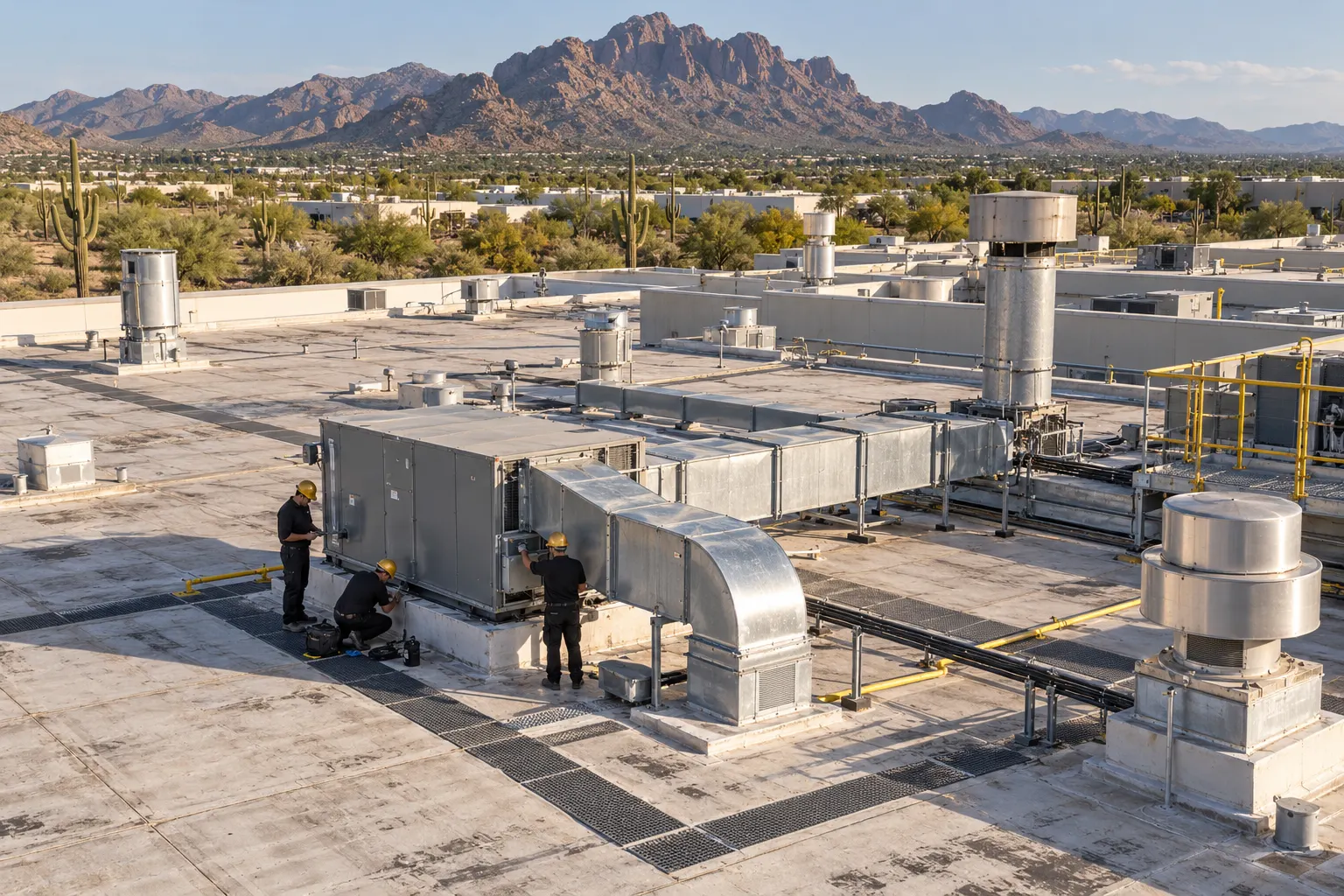
Industrial roofs often stay in service for years with curb and flashing repairs. Damage spread across large sections changes that.
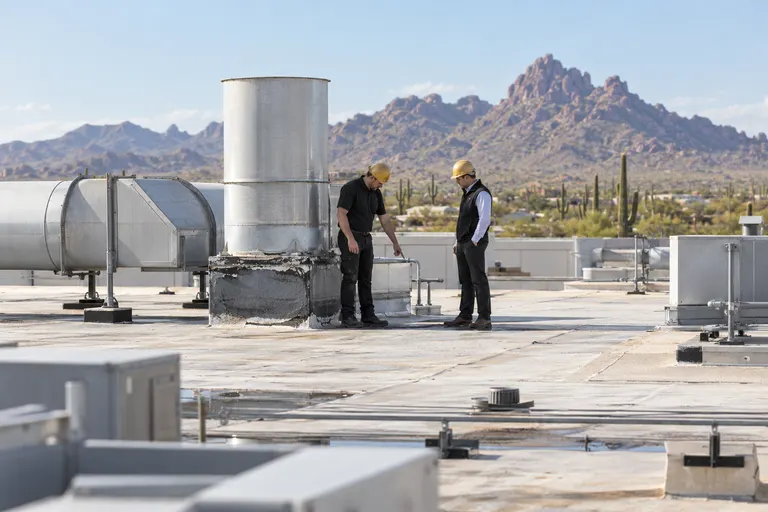
Industrial roofs fail where equipment and people meet the membrane: curbs, vents, and the paths service techs walk.
Fan curb flashing cracked by heat and vibration from the fan itself.
Rebuild the curb flashing and seal the fan base, scheduled while the fan is shut down.
Vent collars split around pipes that heat and cool through each shift.
Replace the collar and flash it into the membrane with material rated for that vent.
Curbs settling under unit weight and pulling the flashing apart at the corners.
Reflash the curb corners and check the deck under the unit for soft spots.
Foot traffic and dropped tools puncturing the membrane between hatches and units.
Patch each puncture and lay walkway pads along the routes techs actually use.
Skylight curbs and plastic panels cracked by sun on wide roof spans.
Reseal or swap the panel and rebuild the curb flashing, with fall protection set up first.
Each repair is scheduled around what runs in the building below.
| Repair | What It Fixes | Planned Around |
|---|---|---|
| Exhaust fan curb reflash | Cracked flashing at fan bases | A fan shutdown window |
| Process vent collar | Split collars at heated vents | The line or process using that vent |
| Unit curb repair | Separated corners under heavy units | HVAC service and cooling needs |
| Walkway pad layout | Punctures from foot traffic | Service routes from hatches to units |
| Skylight repair | Cracked panels and curb leaks | Fall protection setup |
On a plant roof, one leaking curb can reach production below.
Machines and controls under a fan curb stay dry, and the line keeps running instead of stopping for tarps.
Boards around a leaking curb stay firm, so the leak stays a curb repair instead of a section replacement.
Deck panels under heavy units stay free of the rust that weakens their support.
Pallets and racking in the warehouse stay clear of drips from the roof above.
Call and tell us which line or bay is affected. We plan the repair around fan shutdowns and shift changes.
(623) 310-0118Planning comes first, because equipment on the roof keeps running while the work happens around it.
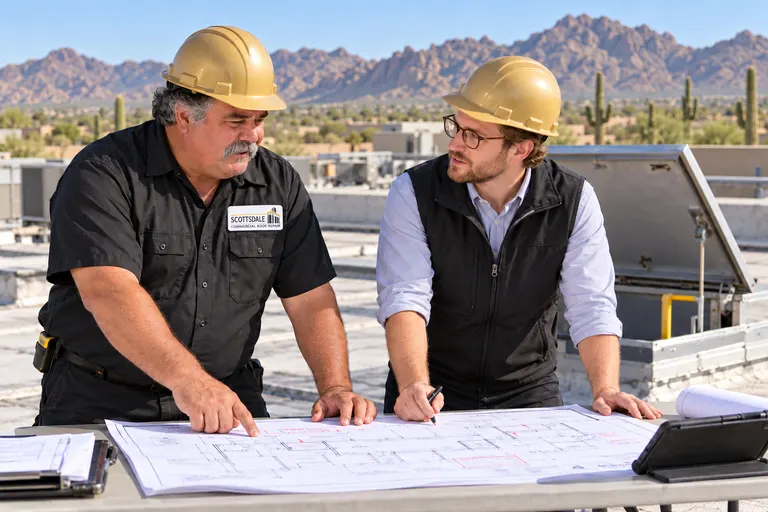
We walk the roof with your facility manager, mark exhaust discharge points, and note which fans and vents can be shut down and when.
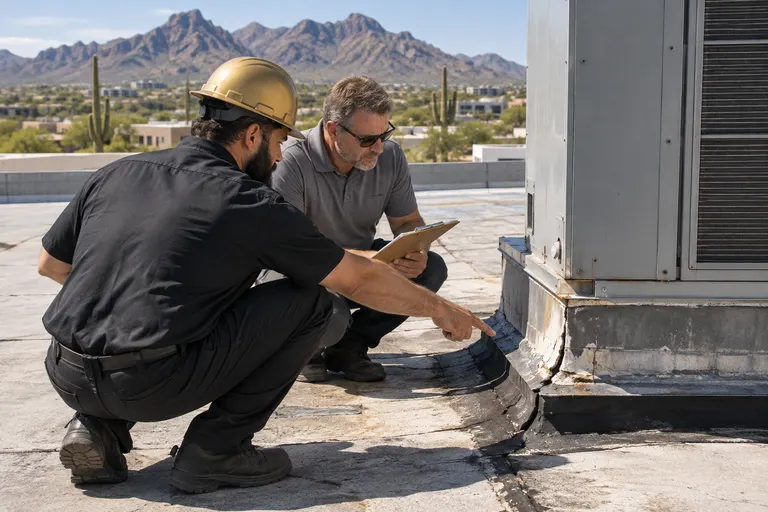
Stains on the plant floor get matched to fan curbs, vents, and unit curbs above. Each suspect curb gets checked for cracked flashing and separated corners.
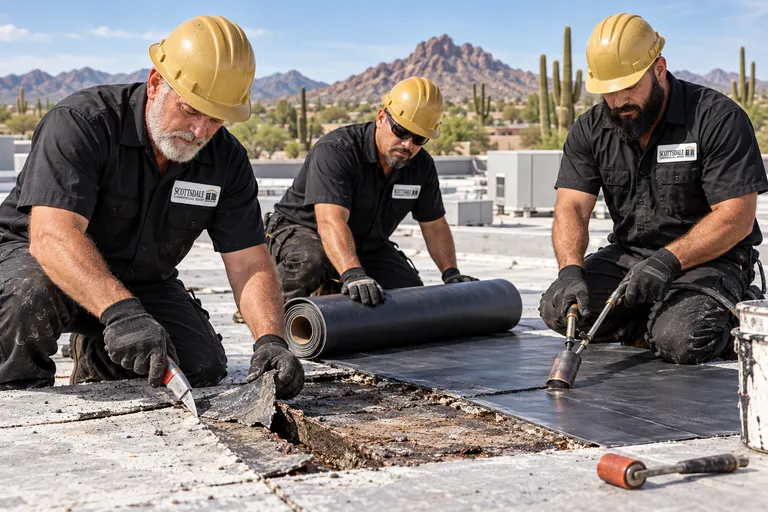
Curbs near intakes get repaired during a shutdown. Materials are staged away from loading docks, and walkway pads go down along service paths.
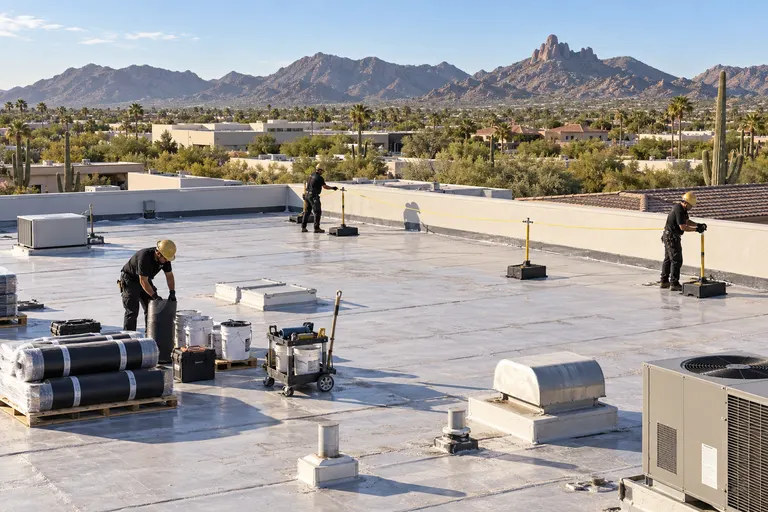
Repaired curbs get water-tested once equipment is back on, and the photo record notes each curb, vent, and pad location for future service visits.
Industrial buildings often need these two services as well.
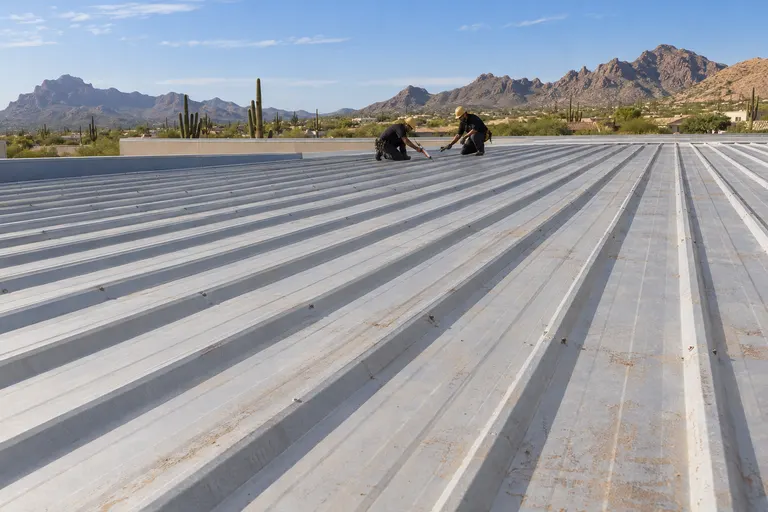
Many Airpark buildings are metal panel structures, and metal roof repair handles their fasteners, laps, and skylight panels.
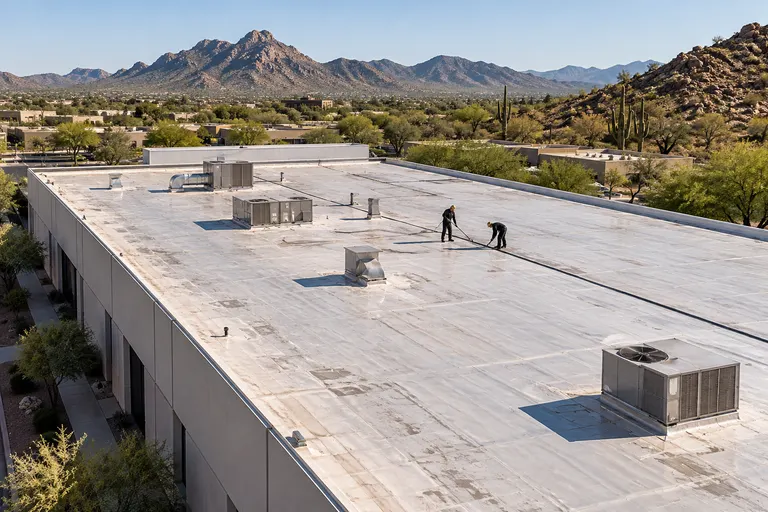
Low-slope membrane sections on plants and warehouses get the same seam and drain repairs covered by flat roof repair.
With a plan agreed first. The Greater Airpark mixes warehousing and light industry, and those roofs carry exhaust fans, process vents, and heavy units. We map exhaust discharge to keep workers clear of fumes, schedule work near intakes during shutdowns, and stage materials away from docks.
Yes, for most of the roof. Only the curbs and vents tied to running equipment wait for a shutdown window. Everything else proceeds during normal operations, with workers kept clear of exhaust paths.
Foot traffic punctures membranes and dents metal panels. Pads along the routes from the hatch to each unit give service techs a path that protects the roof, and they cost far less than repeated puncture repairs.
Some process exhaust does. Grease, solvents, or heat from vents can soften or discolor membrane near the discharge. We note those zones on the inspection and match repair materials to what the vent puts out.
A roof hatch or ladder location, a staging spot away from docks and traffic, and a contact who knows the equipment schedule. Large repairs may need a lift for materials.
Past repair photos, the roof age and system, equipment drawings that show curb locations, and notes from HVAC service visits. A leak that started right after a service visit often traces to a panel left loose or a puncture beside the unit.
Covers or guardrails go up before anyone works near a skylight. Wide industrial spans often have many skylights, and the repair proceeds only after that protection is in place.
Call or request a free estimate, and the first visit maps your roof equipment and its shutdown windows.
Leave your name and number and we will call you back about the leak or damage.
Or call now: (623) 310-0118