Insulation Joints
Boards along the water path stay dry instead of channeling the leak to new spots.

A stain on the ceiling is rarely under the hole in the roof. We trace the water back to its entry point on your Scottsdale building and repair it there.
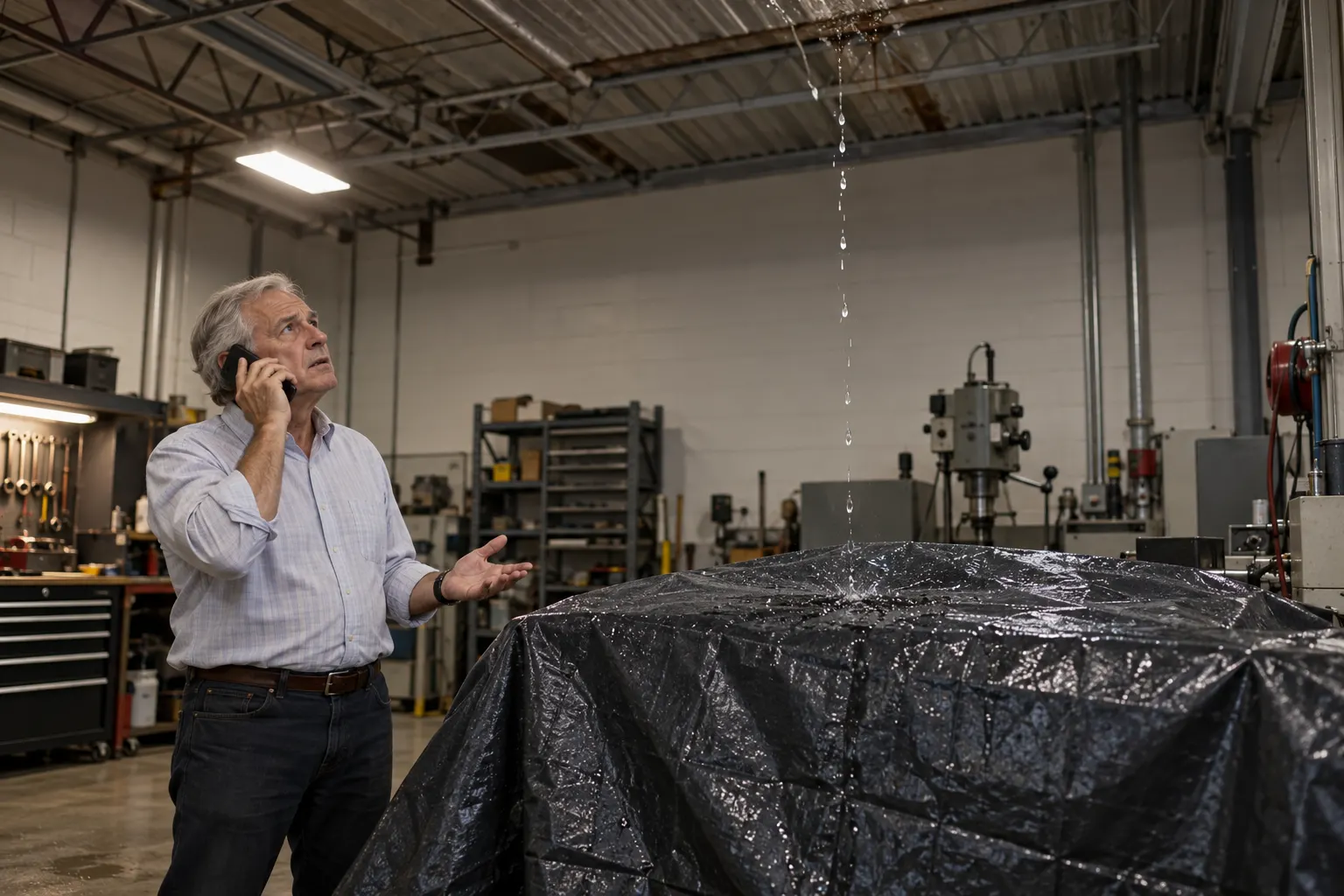
One repaired entry point stops most leaks. A roof with water in many places needs a bigger conversation.
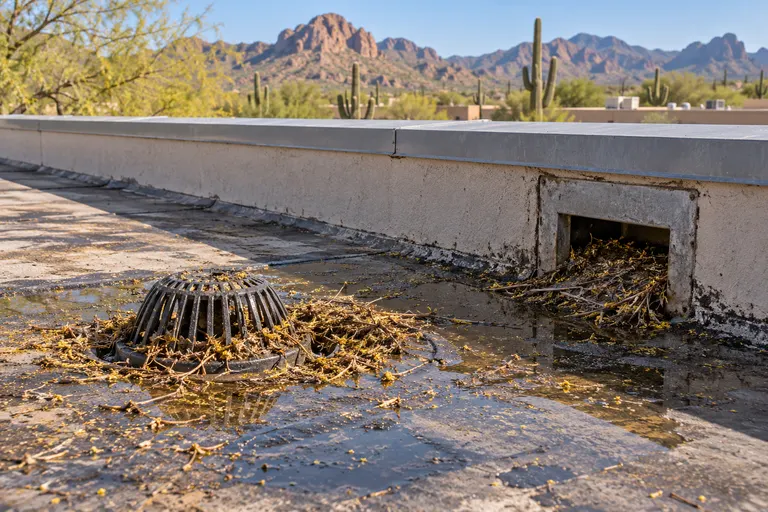
Water travels along the deck before it drips, so the symptom inside points toward the cause without sitting directly under it.
Water running along deck flutes or insulation joints from an opening several feet upslope.
Mark the stain, find that spot on the roof, and check every seam and curb upslope of it.
A beam or conduit guiding water to the lowest point it can find.
Trace the beam line on the roof and check the penetrations and laps above it.
An opening at the parapet coping or stucco letting water into the wall cavity.
Water-test the coping and the base flashing separately to tell a wall leak from a roof leak.
A clogged condensate line or cracked drain pan putting water on the roof every day.
Clear the condensate path and repair the membrane where the water has been sitting.
Wind-driven rain reaching an open lap, or a scupper that backs up when it overflows.
Clear the scupper and seal the laps facing the storm direction, then test with a hose.
Leak work comes in stages: control the water now, then repair the source once the roof is dry.
| Stage | What Happens | Why It Matters |
|---|---|---|
| Temporary leak control | Seal the suspected opening with compatible mastic or tape, clear a blocked drain, and set interior containment | Limits further damage while the source is confirmed |
| Source tracing | Work upslope from the stain, checking seams, curbs, and drains in that path | Finds the real entry point instead of patching where the drip lands |
| Water testing | Run water on one suspect area at a time | Confirms which detail is leaking |
| Permanent repair | Rebuild the seam, flashing, boot, or curb with matched material | Ends the leak at its source |
| Moisture check | Meter readings and core cuts around the leak | Shows whether wet insulation needs cutting out |
Every week a roof leak continues, the water reaches further from the opening.
Boards along the water path stay dry instead of channeling the leak to new spots.
Steel flutes that carry the water stay free of standing moisture and rust.
Tile, drywall, and fixtures stay out of the drip once the entry point on the roof is closed.
Dated photos of the stain and the roof opening support an insurance conversation after storm damage.
Call and tell us where it is dripping. We can set up temporary leak control first and trace the source once the roof is safe to walk.
(623) 310-0118We start inside, at the stain, and finish on the roof with a hose test of the repaired detail.

Moisture readings and a full roof walk show whether one detail or several are letting water in, and how far the water has spread.

Starting from each marked stain, we move upslope across the roof, checking every seam, curb, and drain in the water path.

The opening gets a permanent repair with material matched to the roof: a new pipe boot, a rebuilt curb flashing, or a rewelded seam.
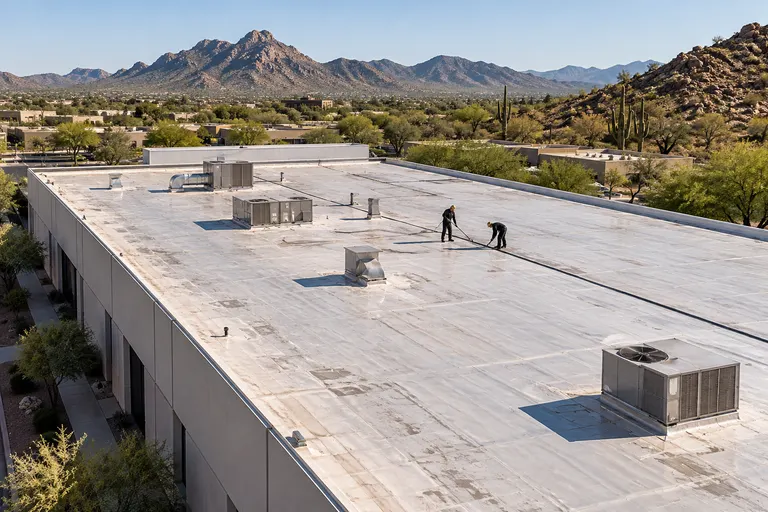
Water runs over the repaired detail while someone watches inside. Photos of the stain, the opening, and the repair go into your record.
Once the source is found, the fix often falls under one of these services.

Most leaks on low-slope buildings trace to flat roof details, and flat roof repair rebuilds those seams, drains, and curbs.
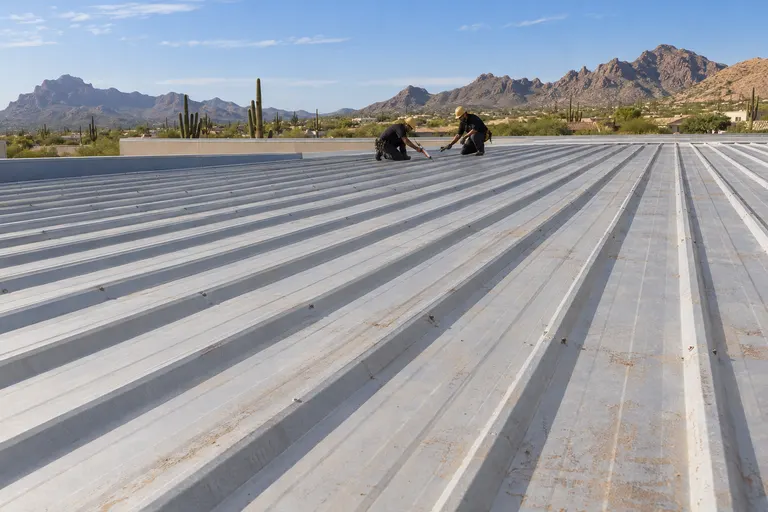
Leaks under metal roofs often start at fasteners and laps, which metal roof repair replaces and reseals along the whole panel run.
Because water rides the roof deck before it falls. It enters at an open seam or flashing, follows deck flutes, insulation joints, or the top of a beam, and drips at a low point or a light fixture. Tracing works upslope from the stain.
One area at a time. Water runs on a single seam, curb, or drain for a set period while someone watches inside. When the drip starts, that detail is the source. Testing several areas together would hide which one leaks.
They show up then. Storms between June 15 and September 30 bring wind-driven rain and dust that clogs drains, so small openings that stayed dry all spring start dripping. A roof walk in late spring catches many of them first.
Each stain and drip with the date, the roof area above it if you can see it safely from the ground, and anything wet or damaged inside. Those photos help trace the leak and support an insurance claim after a storm.
It finds wet insulation. After sunset, wet areas of a roof hold heat longer than dry ones and show up on an infrared scan. Core cuts then confirm what the scan suggests before any repair-or-replace decision.
Most leaks, yes. Some intermittent leaks appear only in wind-driven rain or when equipment runs, and those take a second look under the right conditions. Temporary control holds in the meantime.
Call or request a free estimate, and we start at the stain inside your Scottsdale building and follow the water back to the roof.
Leave your name and number and we will call you back about the leak or damage.
Or call now: (623) 310-0118