Unit Curbs
A rebuilt curb flashing replaces the stack of patches and stops water from tracking between them.

Commercial roof repair on the McDowell Corridor often means older roofs with patch over patch at HVAC curbs, cut back to the original flashing and rebuilt.
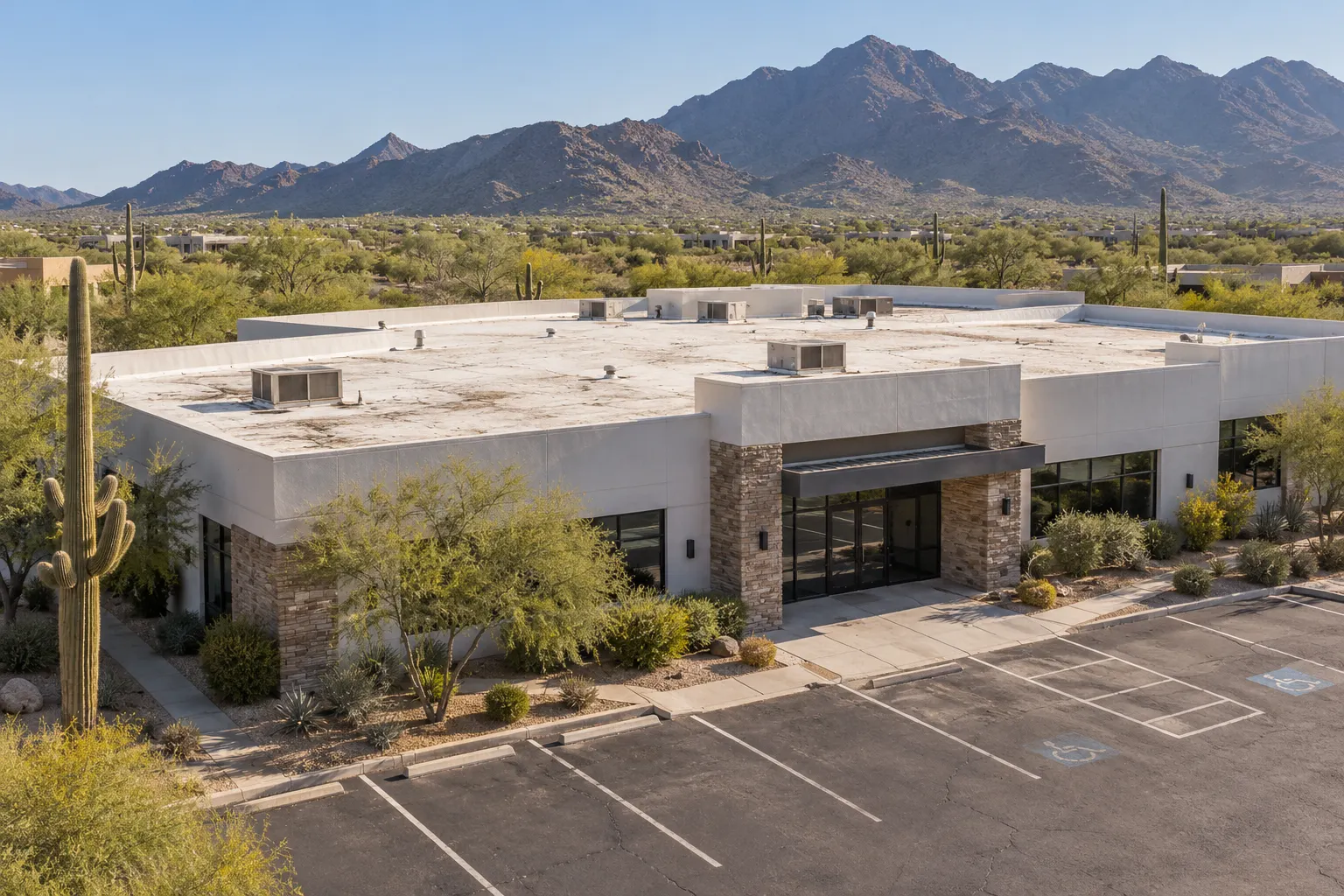
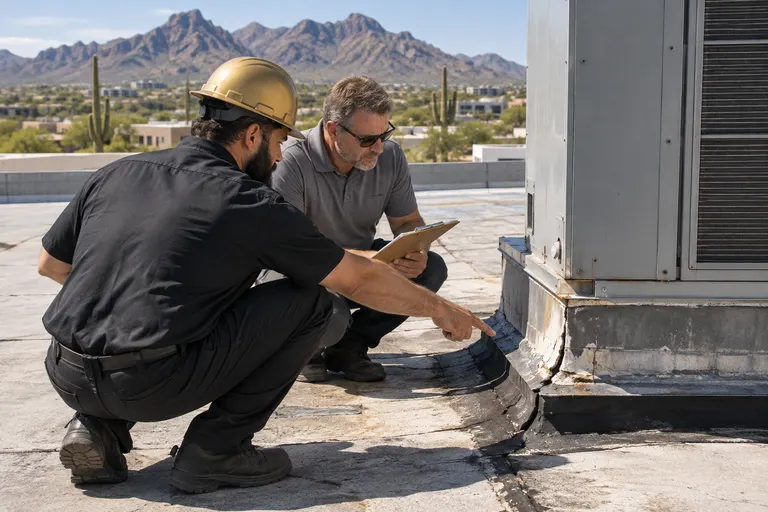
Each new tenant and each new unit tends to leave another patch at the curb. After enough layers, nobody can tell which one is leaking, and water runs between them before it reaches the deck.
The repair starts by cutting the layers back to the original curb flashing. What we find there decides the next step: rebuild the curb flashing, or mark that roof area for replacement.
Older retail, office, and restaurant roofs along the corridor share wear tied to age and many past repairs.
Years of patches added over each other as tenants and units changed.
Cut the layers back, find the original flashing, and rebuild the curb in one piece.
Water entering under an old patch and traveling between layers to a new spot.
Remove the patches in that area and trace the path on the original membrane.
Old curbs left in place with dried sealant and open tops.
Close and flash the abandoned curb, or remove it and patch the membrane flat.
Wet insulation from slow leaks that ran under the patches for years.
Moisture readings and core cuts set the size of the wet area to cut out.
Aging membrane hardened by decades of sun.
Repair the open seams and note how much of the field is brittle for planning.
Fixing one curb properly ends the cycle of new patches over old ones.
A rebuilt curb flashing replaces the stack of patches and stops water from tracking between them.
Boards near each unit stay dry, so the wet area stays small instead of growing with every patch.
Shops and offices below keep dry ceilings through changes in tenants and rooftop equipment.
Photos of each curb during the cut-back give the next owner or tenant a clear history of the roof.
Two services handle most older corridor roofs.
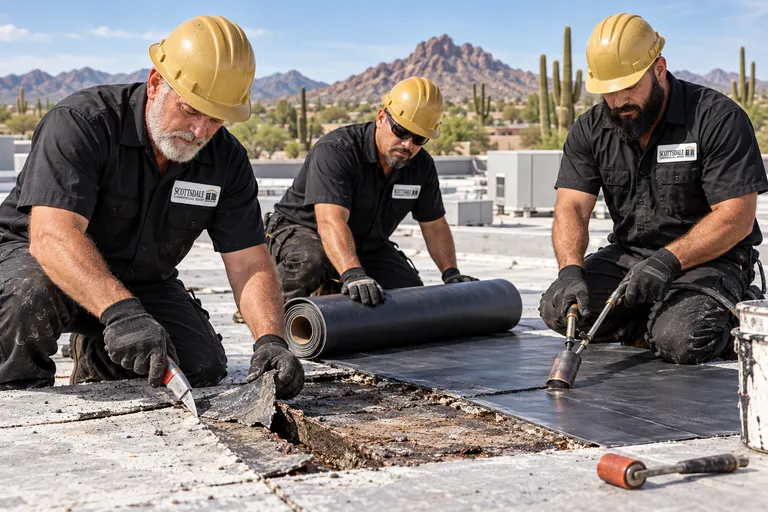
Low-slope membrane and built-up roofs get curb rebuilds, seam repairs, and wet-area cut-outs matched to the older material.
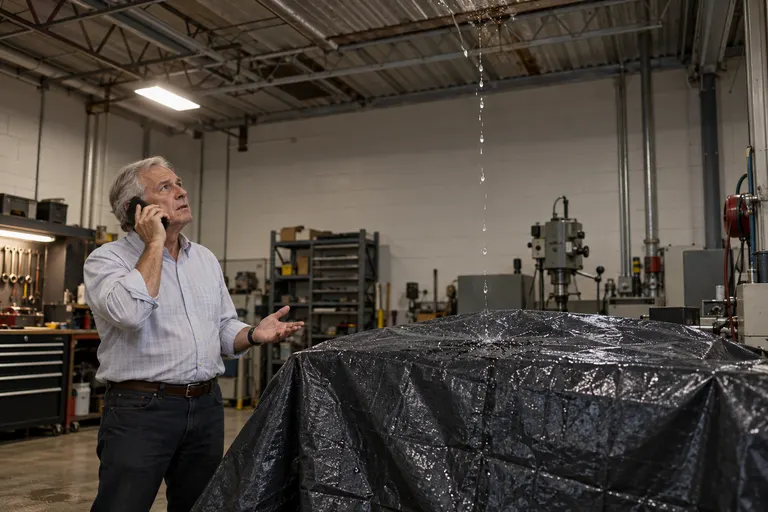
A leak that keeps returning after patches gets traced on the original membrane, under the layers, to its real source.
Call and tell us how many times the leak has come back. A cut-back to the original flashing usually ends the repeat visits.
(623) 310-0118The work peels back old repairs before adding a new one.

We photograph every curb and count its patch layers, take moisture readings around each unit, and note abandoned curbs and brittle seams.

Plan sheets and past repair notes, when available, get compared with what the roof shows, so the leak path through the old patches makes sense.
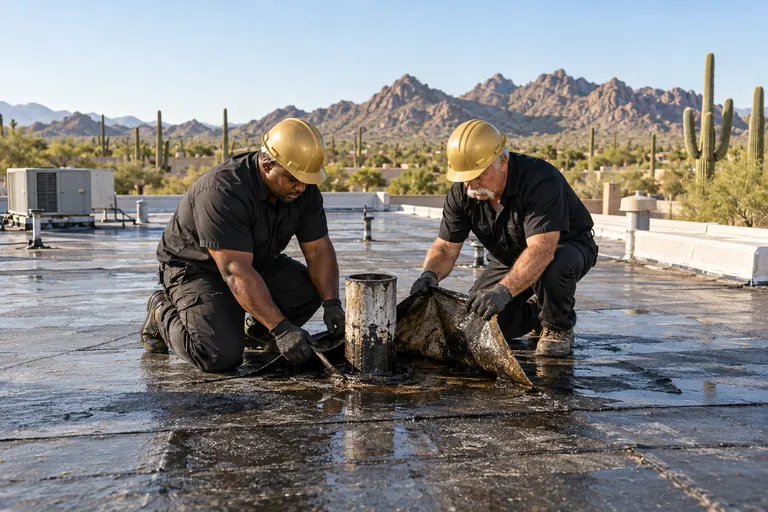
Layers come off down to the original flashing. Wet insulation gets cut out, and the curb is rebuilt with one continuous flashing instead of another patch.
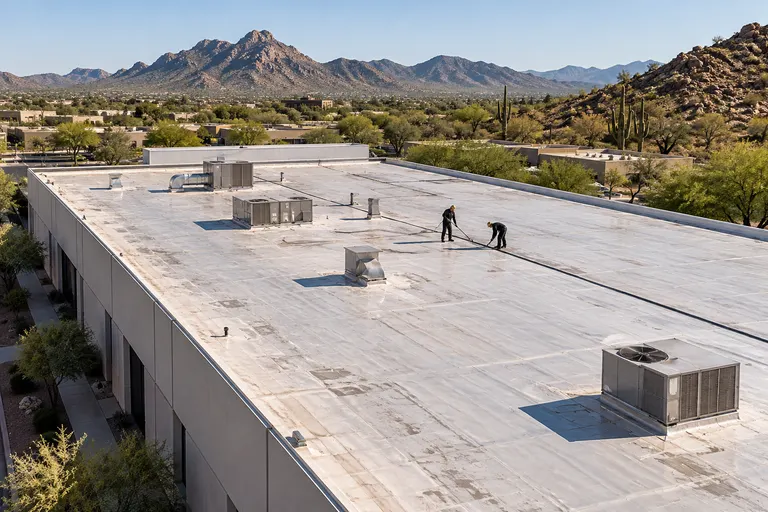
Each rebuilt curb gets a hose test, and the photo set shows the layers removed, the original flashing, and the finished curb.
McDowell Corridor is one of six service areas around central Scottsdale.
North, where flat roofs drain through parapet scuppers.
North-northwest, where winter nights shape repair timing.
East by Shea Boulevard, with roofs seen from hillsides.
West-southwest, with resort roofs above guest areas.
South-central, with restaurant roofs and stucco parapets.
Once water or age has reached the layers under the surface. Leaks at a few curbs or seams point to targeted repair. Wet insulation across large sections, soft or rusted deck, or brittle seams everywhere point to replacing those areas. An infrared scan or core cuts settle it.
Because water travels between layers. A new patch on top seals the surface while the leak keeps entering under an older layer. Cutting back shows the original flashing and where the water really gets in.
Curbs left on the roof after a unit was removed. Their tops are often open or covered with plywood, and their sealant has dried out. We close and flash them, or remove them and patch the membrane flat.
Yes. Curb work stays clear of shop entrances and parking, noisy cutting is planned around business hours, and each opened curb is closed watertight before the end of the day.
Most of it falls under the City of Scottsdale One Stop Shop. Parcels that sit on Salt River Pima-Maricopa Indian Community land go through the Community construction permit office instead.
A core cut shows them. A small sample taken near an edge reveals each membrane and insulation layer, and the count matters because building codes limit how many roof layers can sit on a deck.
Usually, when the unit sits high enough on its curb for new flashing to reach the needed height. Low curbs sometimes need the unit lifted, which we plan with your HVAC contractor.
Call or request a free estimate for your McDowell Corridor building, and we start by counting the patches at each curb.
Leave your name and number and we will call you back about the leak or damage.
Or call now: (623) 310-0118