Insulation
Boards beside a split seam stay dry and firm instead of soaking up water that later has to be cut out.

We repair flat roofs on Scottsdale offices, shops, and restaurants where water actually gets in: seams, drains, scuppers, curbs, parapet flashings, and pipe boots.
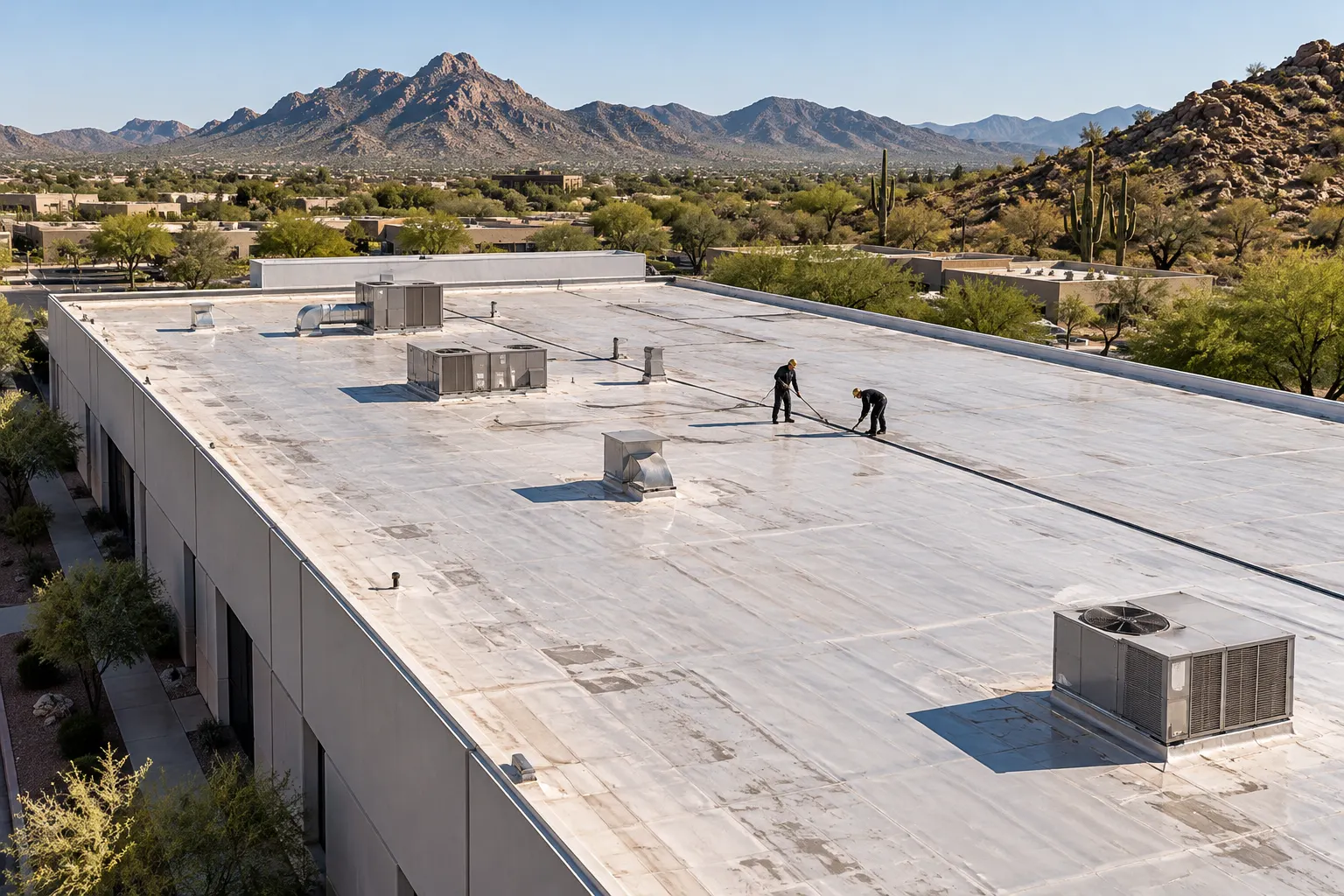
Flat roofs leak at their details long before the open field wears out. The question is whether the layers under the membrane are still dry.
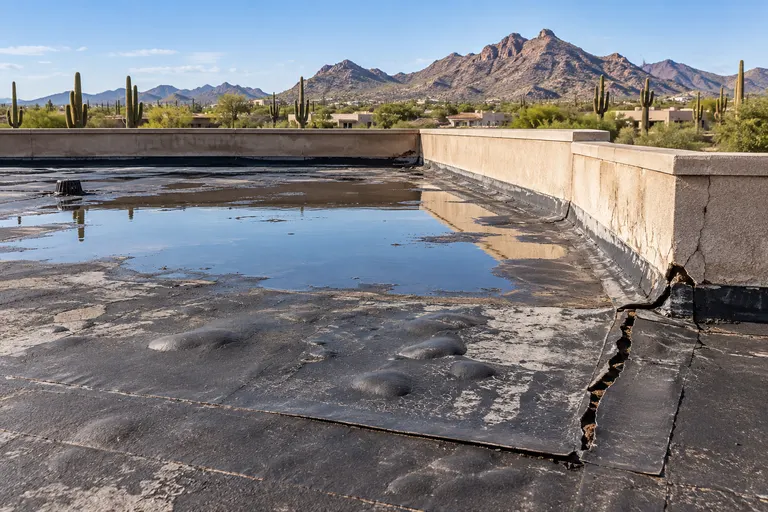
On flat roofs, water almost always gets in at a transition: a seam, a drain, an edge, or a penetration.
Laps opened by years of daily heating and cooling, letting dust and water under the edge.
Probe the full seam run, then reweld TPO laps or reseal built-up and modified bitumen laps with matched material.
Dust packed into the strainer, holding water against the drain flashing until it wears through.
Clear and reset the strainer, check the clamping ring, and rebuild the drain flashing where the membrane has thinned.
Curb sealant that dried in the sun and pulled away from the metal curb.
Remove the old sealant and rebuild the curb flashing with a proper overlap and termination.
Gaps under the coping cap or failed counterflashing letting water into the wall cavity.
Reseal coping joints, rebuild the base flashing, and close stucco cracks above the roof line.
Pipe boots and vent collars that cracked after years of direct sun.
Cut out the cracked boot and install a new one flashed into the membrane.
Each repair is matched to the membrane on your roof, since TPO, built-up, and modified bitumen take different materials.
| Repair | What It Fixes | When It Is Enough |
|---|---|---|
| Seam reweld or reseal | Open or lifted laps along a seam run | The membrane beside the seam is still flexible |
| Drain and scupper rebuild | Worn flashing and clogged strainers | The deck under the drain is solid |
| Curb reflashing | Dried sealant and split corners at rooftop units | The curb itself is level and dry |
| Coping and base flashing repair | Water entering at the parapet | The stucco wall behind it is intact |
| Wet area cut-out and patch | A pocket of wet insulation under one leak | Moisture readings show the wet area is contained |
Water that gets past a flat roof seam spreads sideways before it shows up inside.
Boards beside a split seam stay dry and firm instead of soaking up water that later has to be cut out.
A steel deck under a sealed drain stays free of the rust that spreads from standing water.
Resealed coping keeps water out of the stucco wall, where it would run down behind the membrane.
Tile and fixtures under a rebuilt curb stay clean through the next monsoon storm.
Call with the location of the drain or the stain. A packed strainer can often be cleared on the visit when the roof is inspected.
(623) 310-0118The work follows the water from the stain inside to the seam or flashing that let it in.

We walk every seam run, drain, scupper, curb, and parapet, and take moisture readings at soft spots in the membrane.
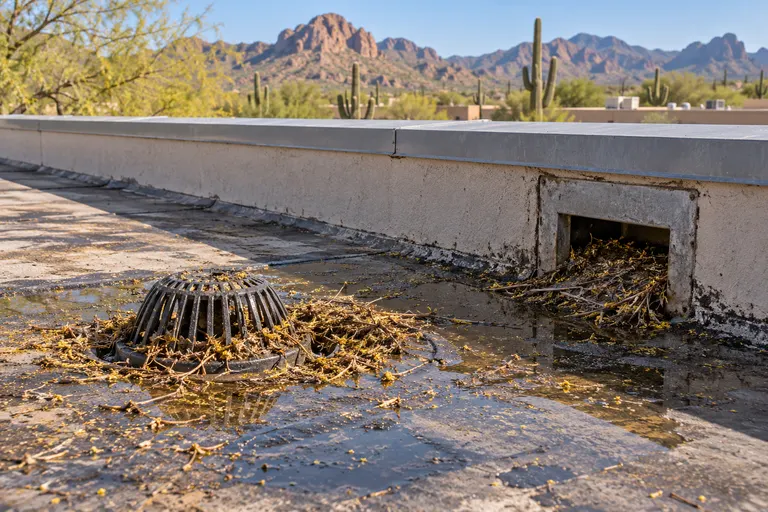
Packed drains and dirt rings show where water sits. Seams upslope of each interior stain get probed by hand until the opening turns up.
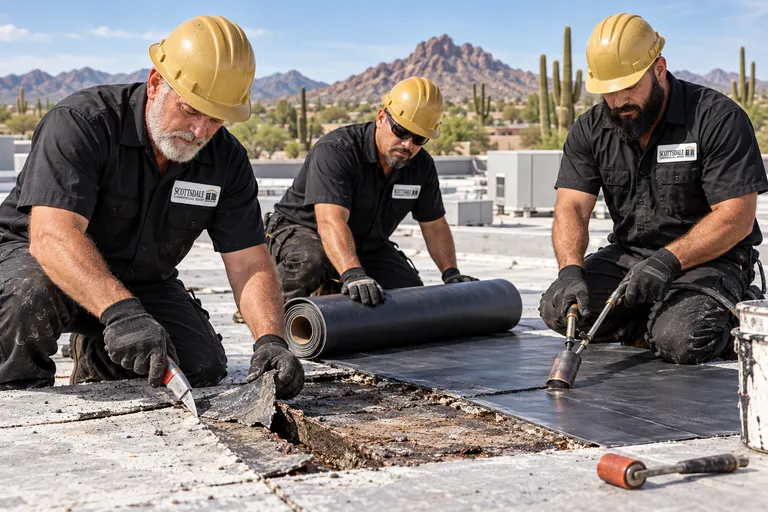
Wet insulation under the leak gets cut out and replaced, then new membrane is welded or adhered over it and lapped onto the existing sheet.
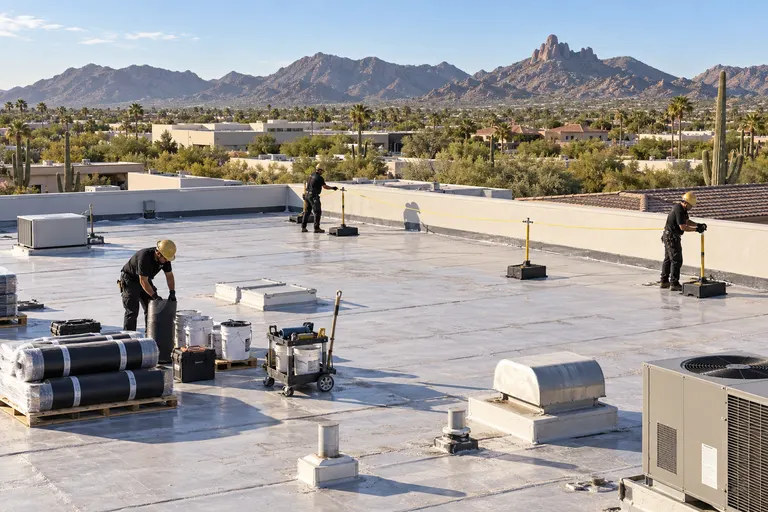
Each repaired seam or drain gets water run across it, and you receive photos showing every location we opened and closed.
Flat roof work often overlaps with these two services.
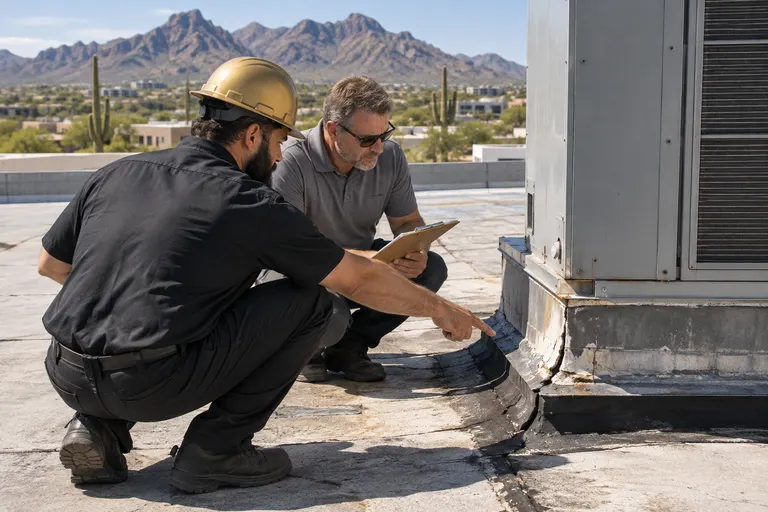
When a stain inside has no obvious source on the flat roof, leak repair traces it across the deck before anything gets patched.
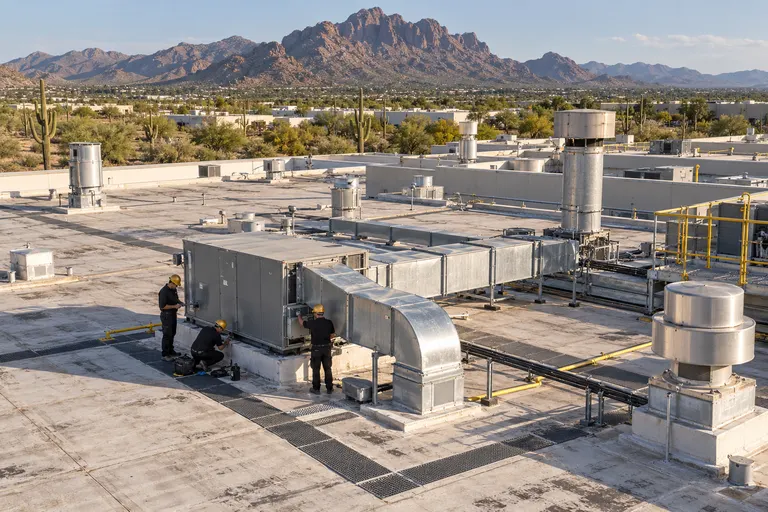
Flat roofs over warehouses and plants carry fan curbs and process vents, which industrial roof repair plans around production.
At the transitions. Seam laps split from daily heating and cooling, drains and scuppers pack with dust, curb sealant dries out, coping joints open, and pipe boots crack in the sun. The open field of the membrane is rarely the first place water gets in.
Usually, if the membrane still welds. We test a small spot first: clean, scuff, and weld. TPO that accepts a clean weld can take seam and patch repairs. Sheet that will not weld has reached the end of its repair life.
By scraping back the gravel, cutting out the damaged felts, and building new plies over the area with matching bitumen. The gravel goes back on afterward to keep the sun off the new layers.
Some do. A small blister with intact membrane gets photographed and watched. A blister that has split, or one growing near a seam, gets cut, dried, and patched before water reaches the insulation.
Partly. Clearing a packed drain, resetting a strainer, or opening a scupper often clears standing water. Low spots from a sagging deck or missing slope need more than a repair, and we tell you when that is the case.
Most seam, drain, and curb repairs fit in one visit once the leak source is found. Cutting out wet insulation adds time for drying and rebuilding the area, and adhered materials need dry weather.
Request a free estimate or call, and the first step is a walk of every seam and drain on your Scottsdale building.
Leave your name and number and we will call you back about the leak or damage.
Or call now: (623) 310-0118